
What Can You Store in a Refrigerated Trailer or Container?
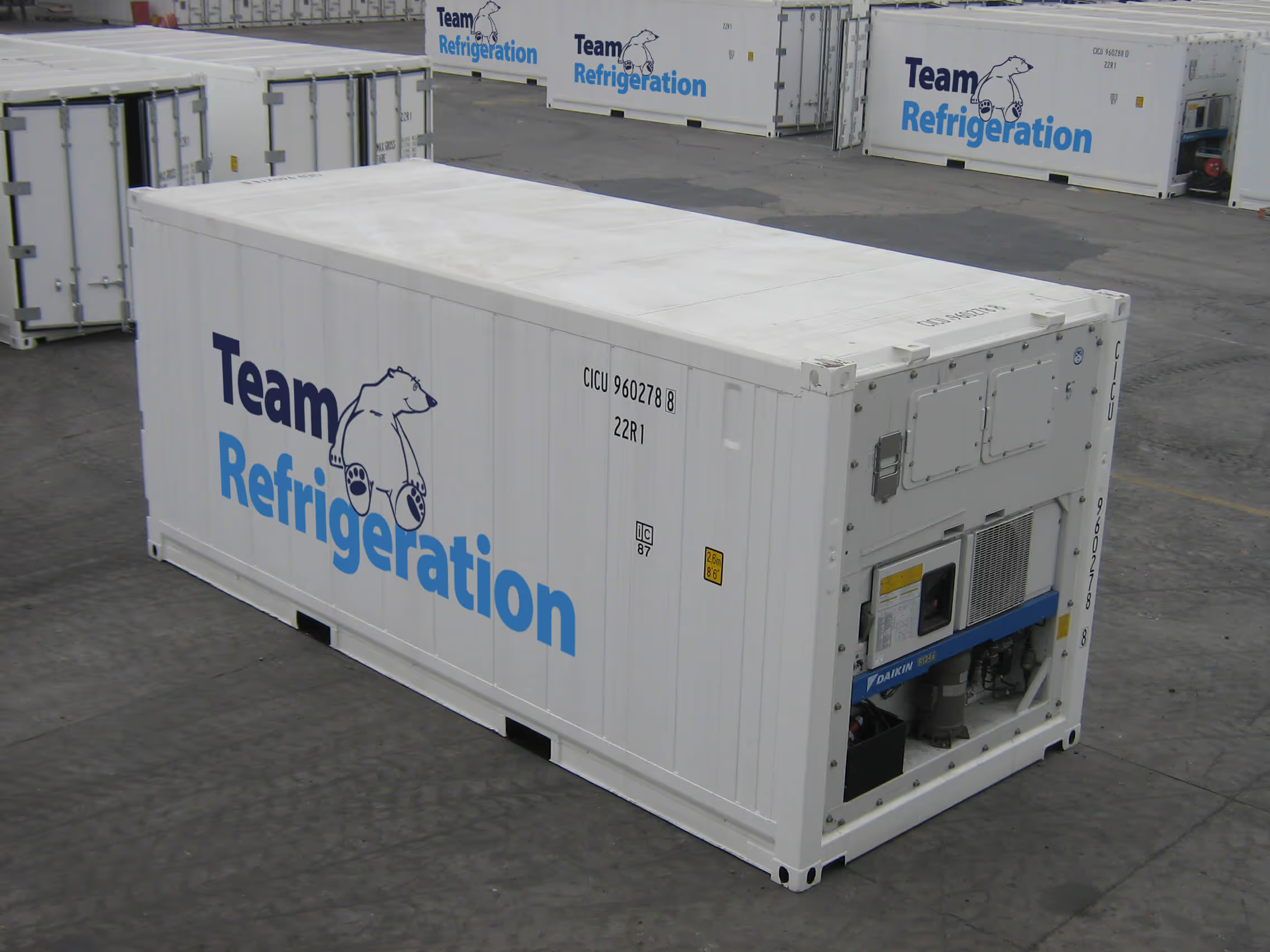
It's one of the questions we get asked most often: what can you actually store in one of these things?
The short answer is most things that need to stay somewhere between -20°C and +15°C - frozen pallets of stock, cases of drinks, fresh and frozen food, pharmaceuticals, engineering materials, even the occasional consignment of period costumes (yes, really).
This guide runs through what fits, what doesn't, and the practical things worth knowing before you book.
Temperature range and how the units work
Our refrigerated trailers and containers operate across a range of +15°C down to -20°C, which covers virtually every commercial cold storage need short of ultra-low pharmaceutical applications. That gives you a chilled mode for fresh produce, drinks and dairy at the top end of the range, and a frozen mode for meat, fish, ice cream and frozen ready meals at the bottom.
There's one important thing to know up front: our units are designed to hold a temperature, not to bring stock down from ambient. If you're storing frozen goods, they need to go in already frozen. The motor will maintain the temperature for as long as the unit is plugged in, but it won't freeze a warm pallet of food from scratch. The same goes for chilled stock: bring it in cool and we'll hold it cool, but it isn't a blast chiller.
This catches people out occasionally, so it's worth knowing when you're planning. If you genuinely need to actively chill or freeze something down from room temperature, you'll want a different solution. Give us a call and we can usually point you in the right direction.
Food, drink and the mixing rule
Most of what we hire is used for food and drink storage. Fresh produce, dairy, meat, fish, prepared and ready-to-eat foods, frozen ingredients, ice, drinks of every kind - all standard. We hire to restaurants, pubs, caterers, food producers, retailers and events constantly, and these are the day-to-day uses.
The one rule worth flagging is the mixing rule. You can't store chilled and frozen products in the same unit. Drinks need to be kept around 2-5°C; ice cream needs to be at -18°C or below. Put both in the same trailer and either your drinks freeze solid or your ice cream melts. The solution is straightforward: hire two units, one set as a fridge and one as a freezer. For smaller frozen volumes, like a few tubs of ice cream for an event, to buy a small chest freezer alongside a chilled trailer often does the job and saves on hire cost.
Frozen pallet storage: trailers or containers?
This is the most common bulk-storage question we get, especially around frozen pallet storage. The short answer: refrigerated containers are usually the better choice for pallets rather than trailers. A few reasons for that:
- They sit close to ground level, so they're easier to access than a trailer that's up on its wheels.
- They're larger overall, which means more pallet capacity and more room to move pallets around once they're inside.
- Each unit comes supplied with a heavy-duty ramp, so pallet trucks and trolleys can be wheeled straight in and out.
- The extra internal space matters for more than convenience - air needs to flow around the goods for the unit to run efficiently, and an over-packed unit struggles to hold temperature.
On capacity: a 20ft refrigerated container holds roughly 10 euro pallets (800mm × 1200mm) or 8 standard pallets (1000mm × 1200mm). A 40ft container roughly doubles that - 20 euro pallets or 16-17 standard pallets, depending on whether you load them straight in or staggered. If you're at the upper end of what a 20ft will fit and there's any chance of more pallets being added later, it's almost always worth going up to a 40ft. The hire-cost difference is small relative to the headache of running out of space mid-project.
Trailers can store pallets too if a container isn't workable for the site - they're not the wrong tool, just usually not the optimal one when pallets are involved. Worth a quick call to talk through what you've got and the access on site.
Less obvious things people store
Food and drink are the everyday uses. Beyond those, we get calls about a much wider range of things:
- Pharmaceuticals and medical supplies. Medicines, vaccines and clinical materials all need verifiable temperature control. The units hold the required ranges, and monitoring can be added where it's needed.
- Engineering materials and composites. Resins, prepreg, carbon fibre and similar materials need to be held at reduced temperatures before use or testing. Manufacturers use our units as on-site cold stores when their main refrigeration is unavailable or when they need additional capacity for a specific project.
- Flowers and plants. Florists and wholesalers use them around big events (weddings, exhibitions, peak weeks like Valentine's and Mother's Day) to extend the working life of cut stock.
- Moth larvae treatment for textiles. This one sounds odd, but it's a real use case… Holding moth-infested clothing, carpets or soft furnishings below 0°C for a couple of days kills the larvae without damaging the fabric. We've done it for theatre wardrobes and a memorable consignment of period costumes that needed saving.
If you've got something unusual you want to store, it's worth a quick conversation. The chances are we've either done something similar or we know whether the unit is right for it.
Racking and how to lay the unit out
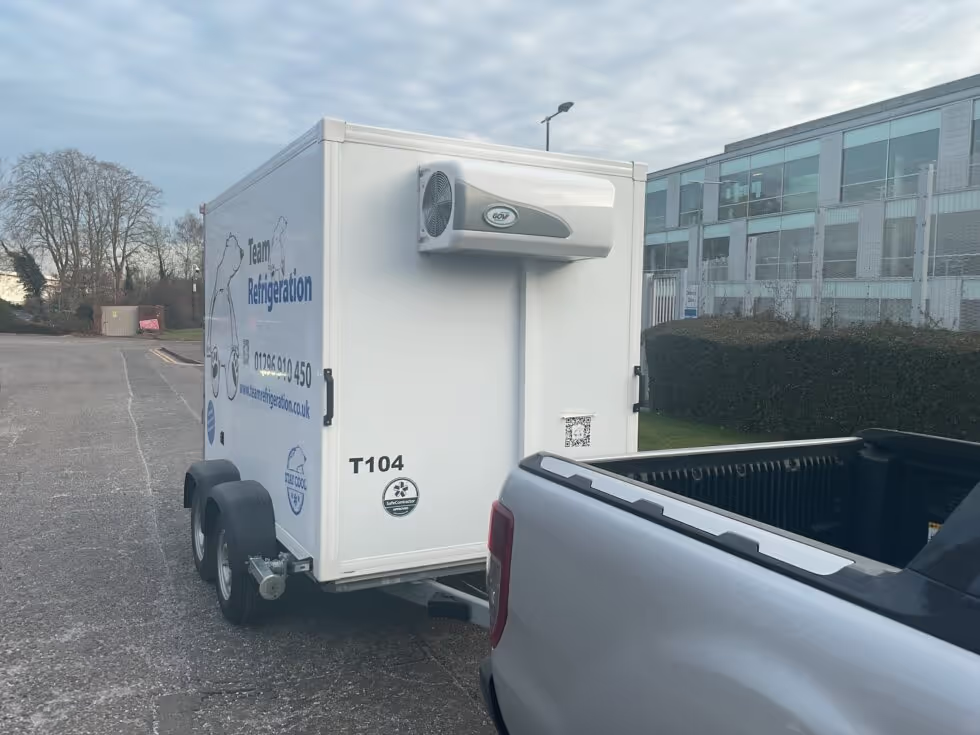
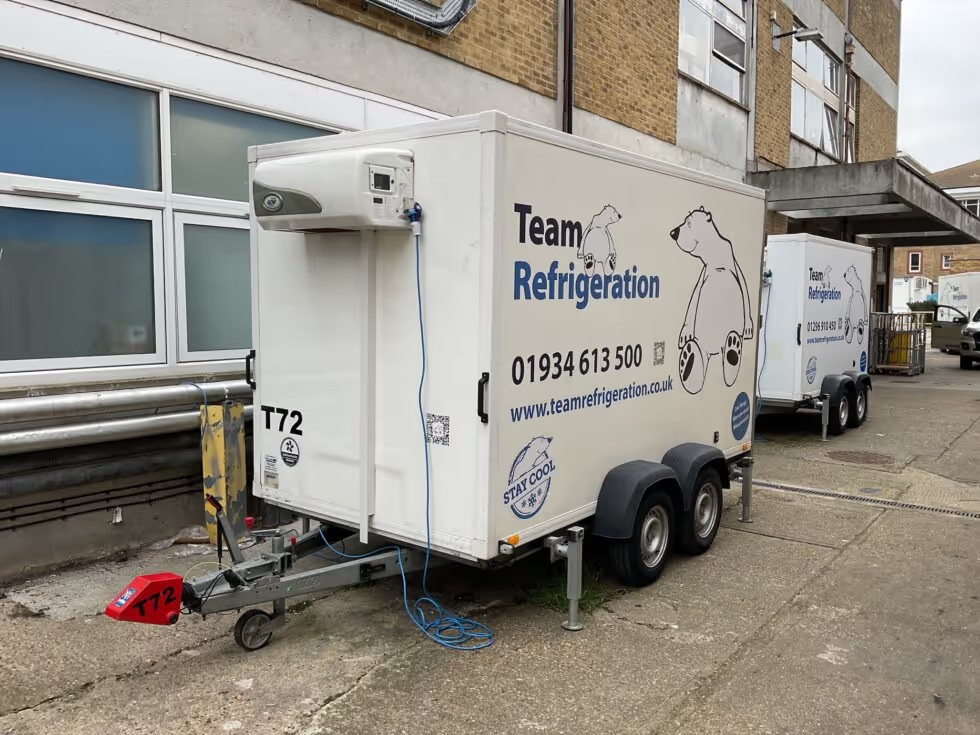
Our refrigerated trailers can be supplied with or without internal racking, depending on what works best for what you're storing. The options are:
- Empty, to maximise floor space: best for pallets, large cases or bulky stock.
- Racking on one side, with floor space on the other: flexible for mixed stock.
- Racking on both sides, for maximum shelf storage: best for cases, trays and smaller items.
Racking is supplied at no extra cost. The only thing we need is for you to tell us at the point of booking, otherwise if you tell us once the unit is delivered, that means a return trip.
Security: locks, siting and safety
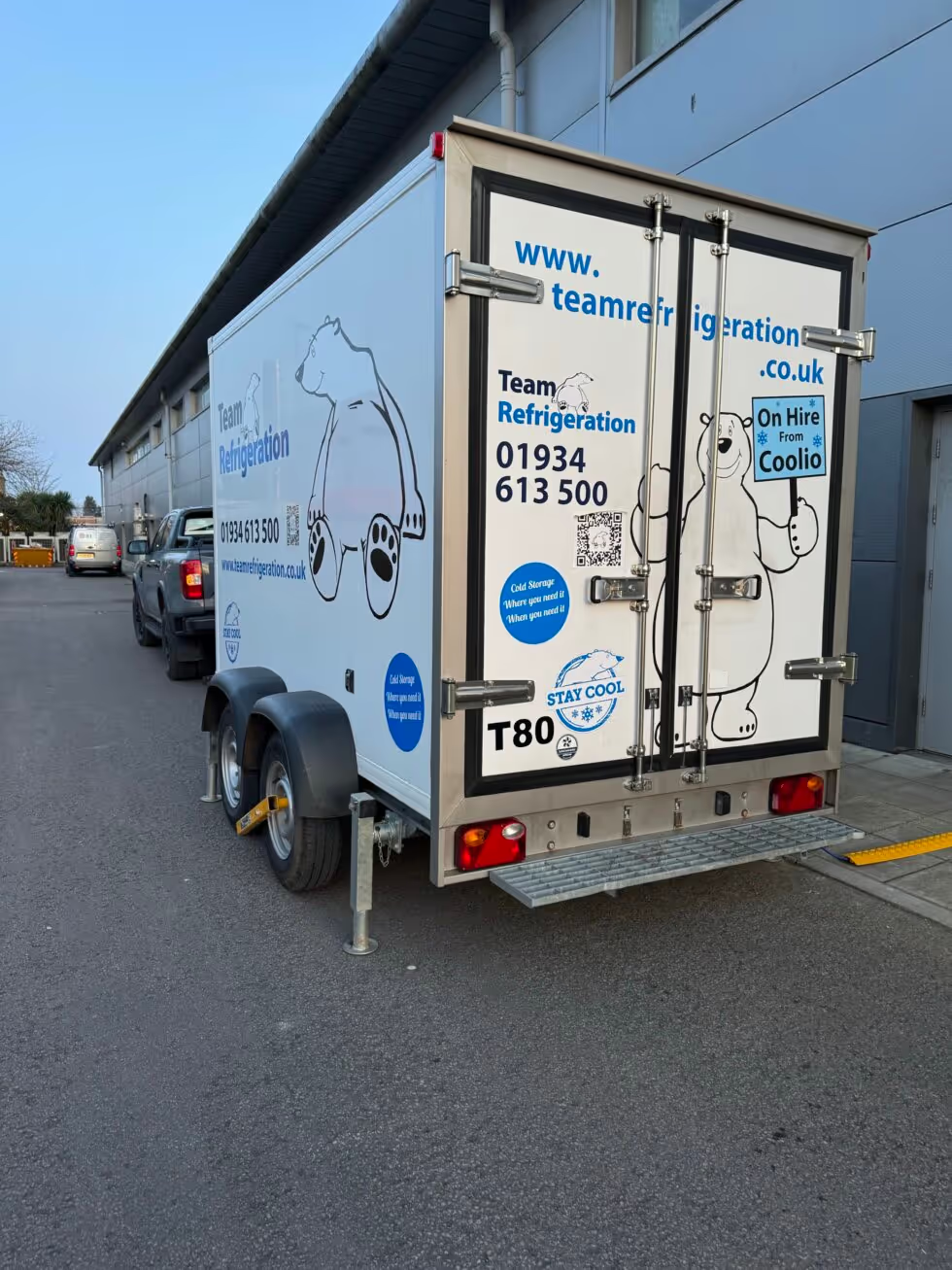
Trailers arrive with a delivery driver who secures the unit before they leave site. That includes:
- Stabilisation legs lowered to stop the unit moving.
- A lock on the tow hitch.
- A wheel clamp on one of the wheels.
- A lock on the door to secure the contents.
Between them, those four points mean the unit and what's inside it stay where you put them. The flexibility of the trailer format also means they can be sited just about anywhere a 4×4 can deliver them: a car park, a side yard, a back alley, a loading bay. We'll talk through the access when you book.
On the safety side, all our refrigerated trailers also have inside door handles. It's a detail people rarely ask about, but it's important: if the door shuts while someone's inside the trailer transferring stock, they can open it from the inside. It avoids the obvious risk.
Power requirements
Power is one of the practical things to check before delivery. The short version:
- Refrigerated trailers run on a standard 240v 13 amp domestic supply. Most kitchens, pubs and small commercial sites have a suitable socket somewhere accessible.
- Refrigerated containers typically need a 3-phase supply. Larger commercial and industrial sites usually have this, but it's not standard for smaller venues.
If your site doesn't have the right supply, generators are an option, and we can advise on what spec works with our units. There's more detail on the power side in our standalone post on power requirements for refrigerated units.
Before you book
Worth running through a quick checklist before you call:
- What's the stock; chilled, frozen, or both? (If both, you're looking at two units.)
- Roughly what volume? Pallets, cases, individual items?
- How long do you need it for?
- Where will it be sited, and is there a 4×4-accessible spot?
- What's the power supply? Is 13A socket or 3-phase available?
- Do you need racking, and which configuration?
Those answers tell us in two minutes which unit is right for the job. You can browse the full refrigeration hire range for an overview, or get in touch directly and we'll talk it through. Coolio's standing by.
Get Your Custom Quote Today
Contact us now for fast and reliable emergency fridge hire.









More resources

Questions? Fire away.
What is a fridge trailer?
A fridge trailer is a mobile refrigeration unit designed for transporting perishable goods. It maintains a controlled temperature to ensure freshness. Ideal for events or temporary storage, it provides flexibility and convenience.
How do I rent?
Renting a fridge trailer is simple. Just contact us through our website or call our team. We’ll guide you through the process and help you choose the right unit.
What sizes are available?
We offer a variety of sizes to meet your needs, from small trailers to large containers. Each unit is equipped to handle different capacities. Our team can assist you in selecting the best option.
What temperature can I set?
Our fridge trailers allow you to set temperatures based on your specific requirements. Whether you need to keep items frozen or chilled, our units can accommodate. Just let us know your needs when you rent.
Do you offer delivery?
Yes, we provide delivery services for our fridge trailers and containers. Our team will ensure timely and safe delivery to your location. Contact us to arrange the details.