
Refrigerated Trailer and Container Delivery: Times and Site Setup
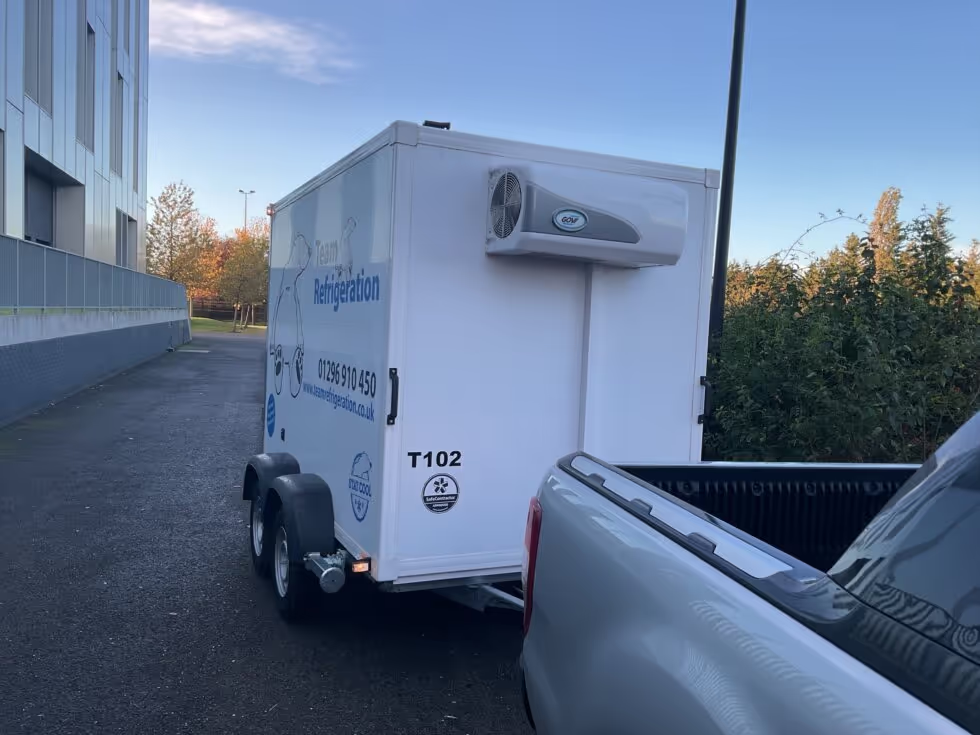
Two things worth knowing before you book: how quickly we can actually get a unit to you, and what the delivery day looks like at your end. Both answers depend on whether you're hiring a refrigerated trailer or a refrigerated container. Trailers are quicker to deliver but the container end of the fleet involves a lorry with a crane, which changes the site requirements substantially.
This guide covers both the timing side and the practical logistics - how quickly we can move, how container delivery works, what your site needs to have in place, and the loading bay option for sites where floor-level installation isn't ideal.
How quickly can we deliver?
Refrigerated trailers
For refrigerated trailers, our standard aim on emergency deliveries within 4 hours. That's backed up by depots across the UK in key areas, which is what makes short-notice trailer delivery workable at scale. The 2-4 hour window covers the vast majority of emergency calls - the exception is rare periods of exceptional demand (peak summer, festival weekends, an unusual run of breakdowns), when we'll be up-front on the call about a longer delivery time rather than promising something we can't hit.
For planned trailer hires - events, refurbishments, seasonal cover - the earlier you book, the more flexible we can be. Peak season (summer and Christmas) fills up early, and last-minute bookings for specific dates during those windows are harder to accommodate than they are the rest of the year.
Refrigerated containers
Containers take longer because they need a different delivery vehicle. Our standard delivery times for a refrigerated container are 3-7 working days from booking. That's the realistic planning figure - we do occasionally have hauliers with availability inside 24-48 hours, but that's opportunistic rather than something to plan around.
The extra time reflects the logistics: containers need a haulier with a hiab-crane-equipped lorry, and those slots are booked separately from our own fleet. When you're planning around a fixed date (an event, a refurb starting on a specific day), give us a call as early as you can so we can secure a slot rather than scrambling for one.
How container delivery actually works
Refrigerated containers are delivered by a lorry fitted with a hiab crane. The driver uses the crane to lift the container off the lorry bed and place it into position on your site. In most cases they can put it exactly where you need it, provided the site has the space and clearance.
A few practical things to know about the delivery vehicle:
- The lorry is typically between 30 and 50 feet long, and nearly 10 feet wide. You'll need enough space on site for it to access and manoeuvre - narrow gates, tight turns and low-hanging cables are all things to check in advance.
- Once the lorry is in position, the driver lowers stabilising legs before operating the crane. That means the lorry needs enough floor space around it to deploy those legs safely.
- The crane also needs plenty of clear overhead space, with no cables, tree branches, canopies or other obstructions in its swing arc. This is worth checking specifically - cabled overheads catch people out more often than any other single site issue.
- The container will be placed immediately to the side of the lorry, parallel to it. That's because the crane has a limited reach - a bigger crane can be arranged for sites where a longer reach is needed, but it's a costly upgrade rather than a standard option.
Site access requirements
The most common site issue that causes a container delivery to be rescheduled is ground surface. The delivery lorry needs hardstanding - a paved, tarmacked or concreted surface. It cannot drive onto grass, gravel, mud or any soft ground, because a fully loaded delivery vehicle will sink or lose traction. If your intended site isn't hardstanding, that doesn't necessarily rule out the delivery - but it does need to be assessed and agreed with us in advance rather than sorted out on the day.
For any delivery, we ask for a delivery questionnaire to be completed as part of the booking. It's a short form that covers site access, ground conditions, overhead clearance and where you want the container positioned. That gives our haulier what they need to plan the delivery properly and avoid surprises on the day.
For sites where access looks tight or unusual, we can run a site survey in advance of delivery day. If you're not sure whether your site will work, mention it when you book and we'll take the practical steps to find out before we commit a delivery slot.
Container installation into a loading bay
One option that's worth knowing about: we can install refrigerated containers directly into loading bays, raised to bay height, without needing a lorry bed underneath the unit to reach the bay's level. That's usually a meaningful cost saving on sites that would otherwise need bay-height access.
The method is straightforward. We use jack stands - one under each corner of the container - that can be pumped up to whatever height the loading bay requires. Once the container is at the right height, the stands are locked into place so the unit is stable and won't move under load. The stands are rated to support the container both when empty and when fully loaded.
The main advantage over a lorry-bed installation is that the container sits directly on the stands underneath, so it can be positioned right up against your loading platform without needing a ramp or a bridge to access the interior. Practically, that means forklifts and pallet trucks can load and unload as if it were a standard bay-level installation.
If a loading bay install is a possibility for your site, mention it when you book and we'll talk through what's involved.
Where to put the container
When you're picking the exact spot for the container, two things matter beyond access: power supply and space at both ends of the unit. Containers need a 3-phase socket within 10 metres of where the container sits, and the cable comes from the motor end (opposite to the doors). More detail on that is in our power requirements guide.
The second thing is space at the motor end. Air needs to flow into the refrigeration unit for it to run efficiently, so packing the container tight up against a wall at the motor end will restrict airflow and hurt performance. The motor end also needs enough working space for our commissioning engineer to set the unit up - a few feet of clearance is usually plenty.
On the day, the delivery driver carries RAMS documents and can supply them in advance if your site requires them for approval before delivery - let us know at the point of booking and we'll get those across.
A note on trailer delivery
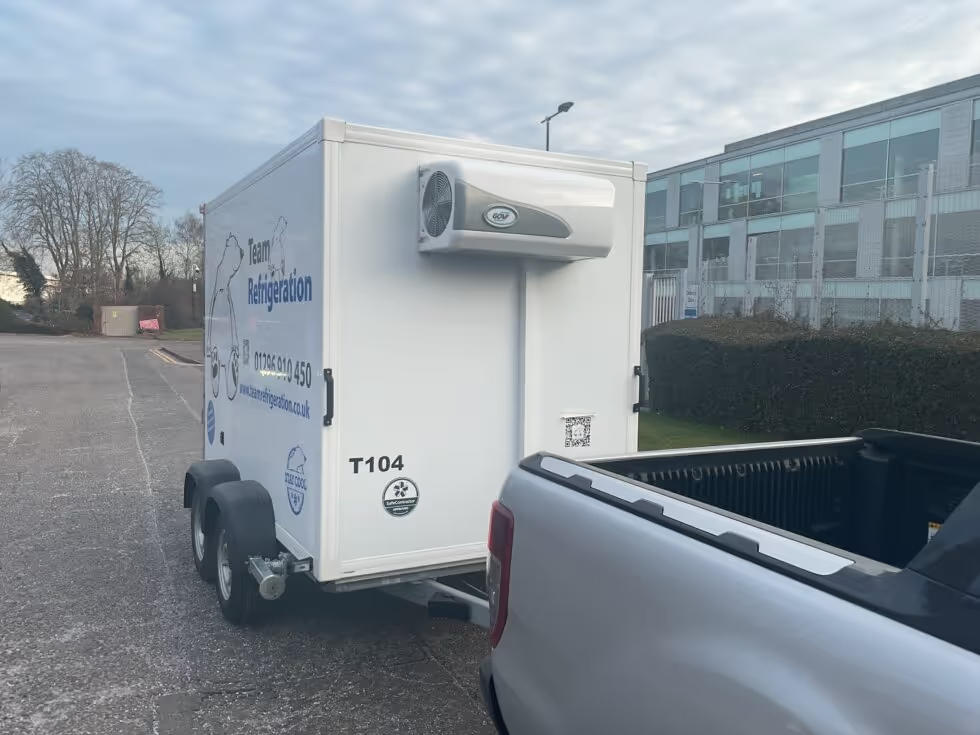
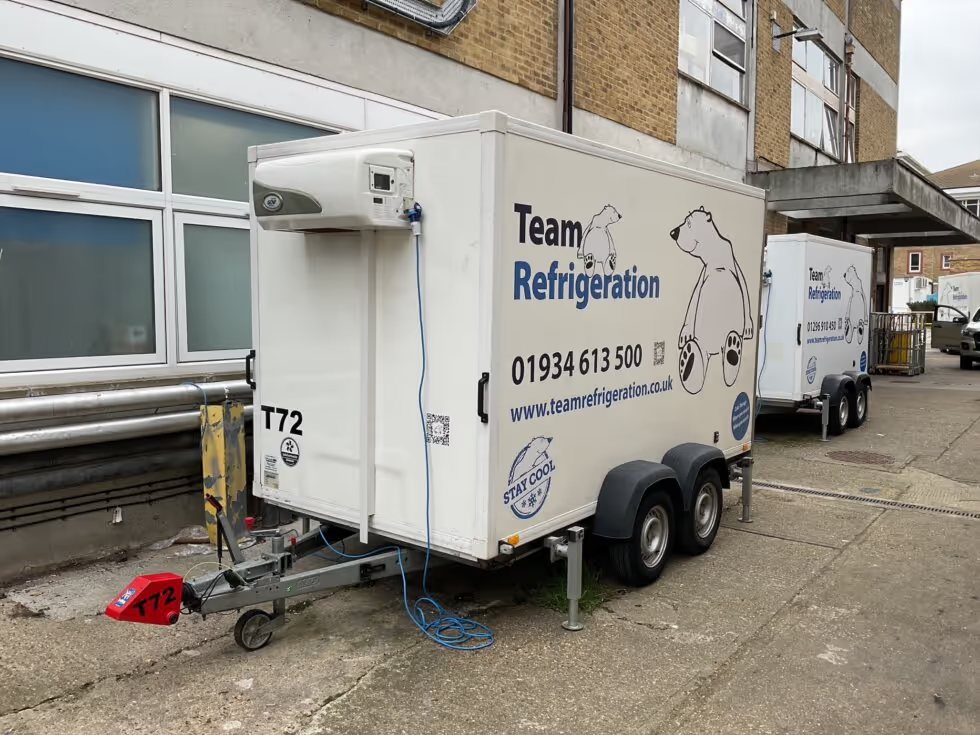
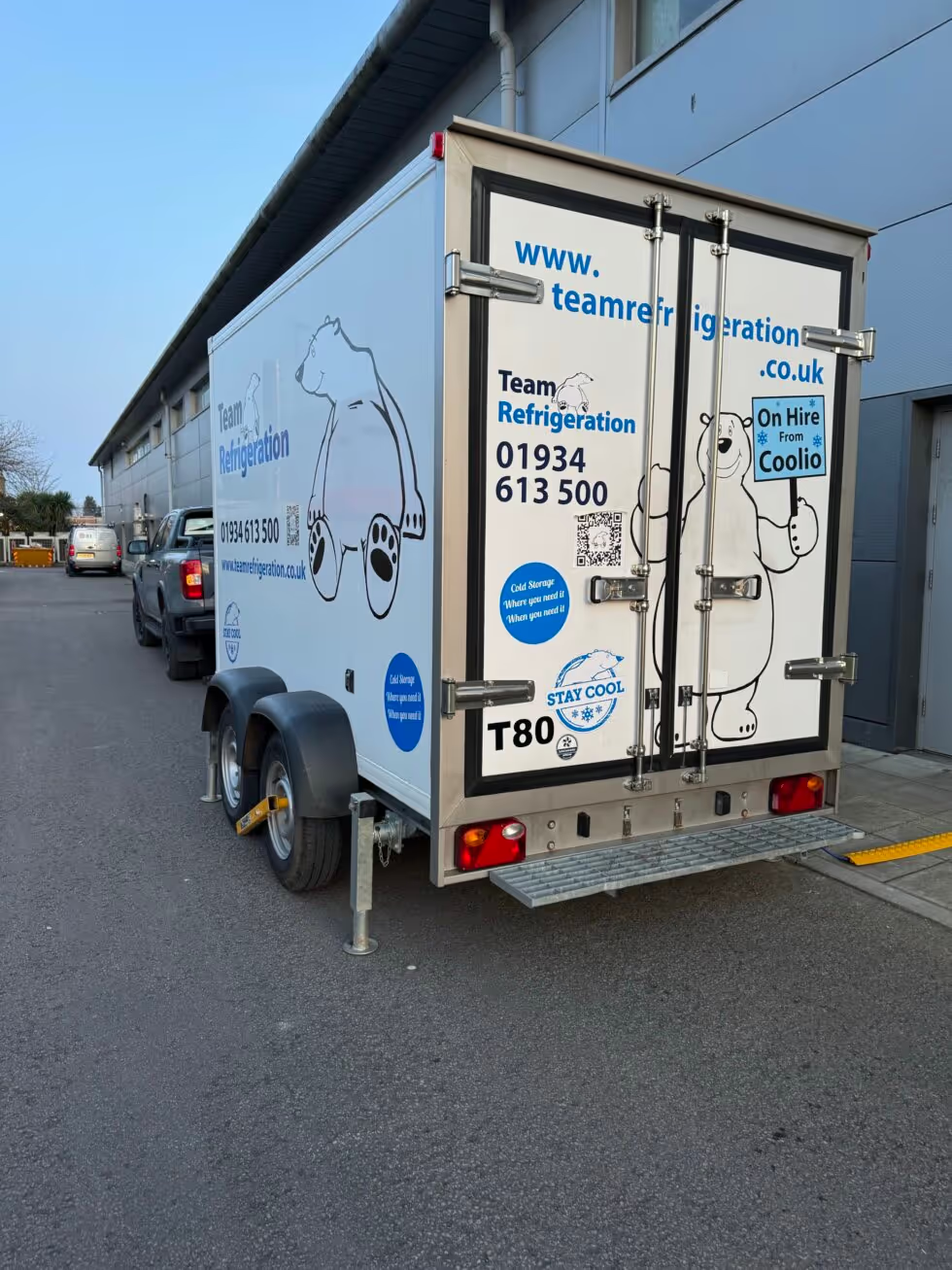
Refrigerated trailers have a much simpler delivery process - they're towed to site by a 4×4, and the driver secures them on arrival with stabilising legs, a wheel clamp and a lock on the tow hitch. Because they don't need a crane or a hiab-equipped lorry, they can be sited in tighter spaces and on a wider range of surfaces than containers. Full detail on trailer setup, including the practical dos and don'ts once the unit is running, is in our mobile refrigeration guide (linked below).
Ready to book?
If you know what you need, give us a call and we'll book the delivery. If you're not sure whether your site is workable for a container specifically, mention it when you call and we'll arrange a site survey or talk through the alternatives. For more on how mobile refrigeration works generally, see our mobile refrigeration guide, or browse the full refrigeration hire range. Coolio's on the case.
Get Your Custom Quote Today
Contact us now for fast and reliable emergency fridge hire.









More resources

Questions? Fire away.
What is a fridge trailer?
A fridge trailer is a mobile refrigeration unit designed for transporting perishable goods. It maintains a controlled temperature to ensure freshness. Ideal for events or temporary storage, it provides flexibility and convenience.
How do I rent?
Renting a fridge trailer is simple. Just contact us through our website or call our team. We’ll guide you through the process and help you choose the right unit.
What sizes are available?
We offer a variety of sizes to meet your needs, from small trailers to large containers. Each unit is equipped to handle different capacities. Our team can assist you in selecting the best option.
What temperature can I set?
Our fridge trailers allow you to set temperatures based on your specific requirements. Whether you need to keep items frozen or chilled, our units can accommodate. Just let us know your needs when you rent.
Do you offer delivery?
Yes, we provide delivery services for our fridge trailers and containers. Our team will ensure timely and safe delivery to your location. Contact us to arrange the details.